About This Course
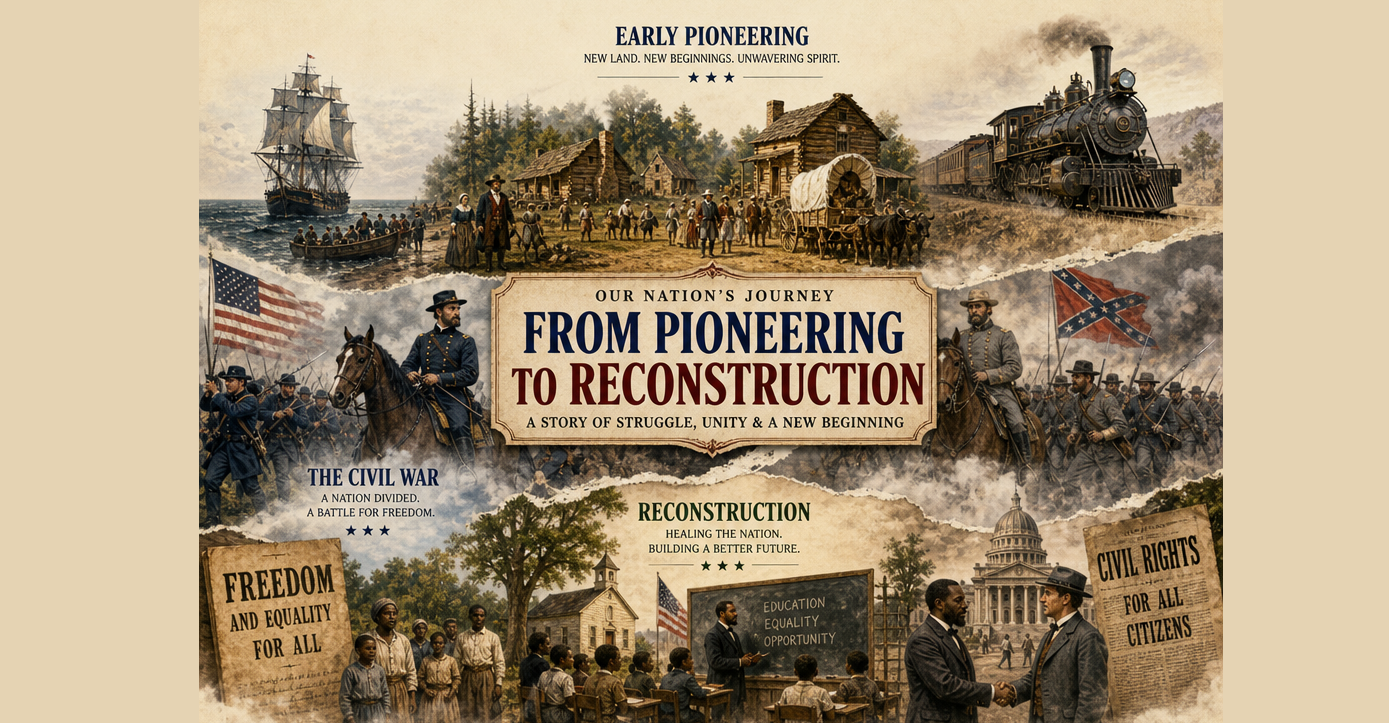
The AP U.S. History journey is massive — stretching from early colonization through the Civil War, Reconstruction, industrial capitalism, and the rise of modern America. Most students feel overwhelmed by the sheer volume of names, dates, laws, conflicts, and turning points. This course changes that. Designed for clarity, accuracy, and genuine engagement, it transforms APUSH from a stressful requirement into a fascinating, confidence‑building experience.
Across more than sixty focused video lessons, you’ll explore the major political, social, cultural, and economic forces that shaped the United States. Each topic is broken down into digestible, story‑driven explanations that make complex events easy to understand and even easier to remember. Instead of drowning in dense textbook language, you’ll learn through vivid examples, humor, real‑world analogies, and clear historical connections that reveal why each event mattered — not just what happened.
You’ll follow the evolution of American identity from the founding documents through the Civil War and Reconstruction, then into the explosive growth of the Gilded Age, industrial capitalism, and the rise of modern corporate power. You’ll see how constitutional amendments reshaped citizenship, how political battles defined federal authority, how economic consolidation created both opportunity and exploitation, and how social movements fought to expand rights for millions.
This course is built for students who want more than memorization. It’s built for students who want to understand history deeply enough to write high‑scoring essays, ace multiple‑choice questions, and confidently tackle DBQs and LEQs. Every lesson reinforces the skills AP graders look for — causation, comparison, continuity and change, and the ability to connect evidence to broader historical themes.
Best of all, mastering this material doesn’t just prepare you for the AP exam. It also prepares you for the CLEP U.S. History exams, giving you an additional pathway to earn real college credit and save thousands of dollars in tuition. Whether you’re aiming for a top AP score, planning to accelerate your college degree, or simply want to understand the forces that shaped the nation, this course gives you the knowledge and confidence to succeed.
APUSH is challenging — but with the right guide, it becomes one of the most rewarding courses you’ll ever take. Let’s make history make sense.
Course Staff
Chief Educational Troublemaker
Michael Williams
Michael Williams is the Chief Educational Troublemaker at World Mentoring Academy — a title he earned the hard way: by spending more than a decade poking, prodding, and occasionally drop‑kicking the traditional education system into the future. In 2010, long before “MOOC” became a Silicon Valley buzzword, Michael was building a free global college from a backpack, a stubborn belief in open learning, and whatever Starbucks Wi‑Fi he could borrow. The Orange County Register profiled him as a “homeless by choice educator to the world,” documenting his 12‑hour days assembling university‑level courses from MIT, Yale, NPTEL, and Stanford — all without charging a cent.
While the big platforms eventually traded “open” for “subscription,” Michael never budged. World Mentoring Academy remains one of the last true free MOOCs on Earth, offering more than 1,000 courses without paywalls, upsells, or fine print.
Michael’s LinkedIn essays — including “Harvard & MIT, Follow a Homeless Educator,” “The Future Won’t Wait for Academia,” and “Future of Education May Have Ancient Roots?” — have earned him a reputation as a futurist with calluses, someone who can explain why AI is breaking the job market, why teens are the workforce pipeline no one is using, and why the next education revolution will look more like ancient Athens than a modern lecture hall.
Across every WMA course, Michael appears as your unofficial guide, mentor, instigator, and occasionally your friendly academic arsonist — the guy who hands you the map, the compass, and the confidence to build a future that doesn’t depend on debt, gatekeeping, or waiting for institutions to catch up.
He helps learners find their place in a world that’s changing faster than universities can update their syllabi — and he does it with humor, humanity, and a refusal to accept that opportunity should be rationed.
If education needs a troublemaker, Michael is happy to volunteer.