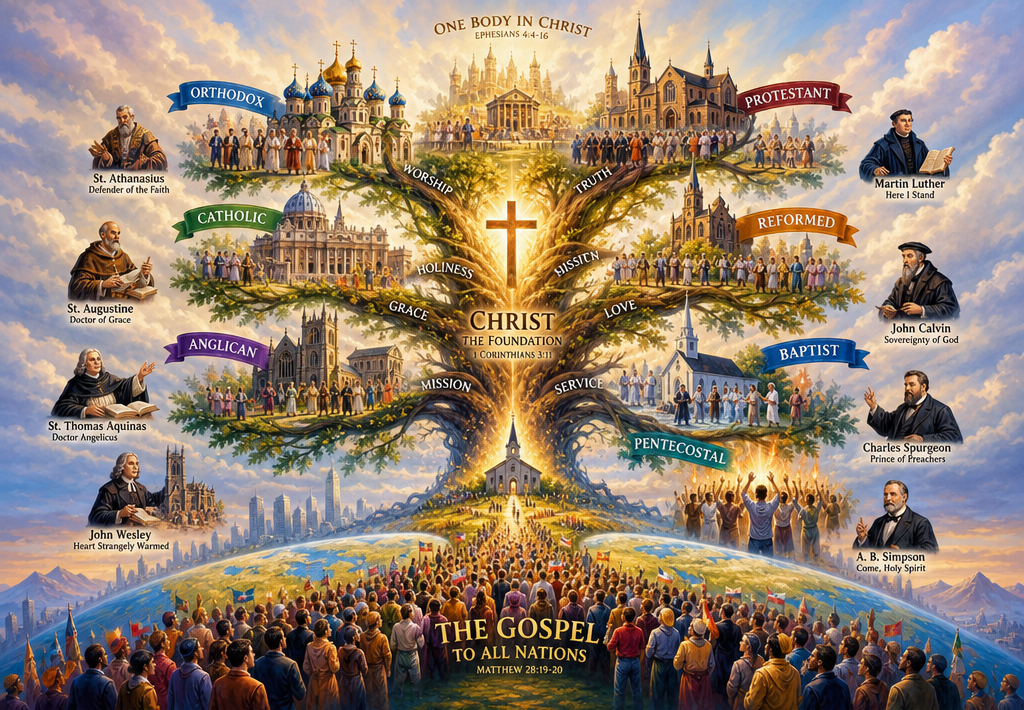
Church History: Reformation & Modern

Gordon-Conwell_Theological_Sem...
Enrollment is Closed

Step into one of the most compelling, wide‑ranging explorations of Christian history available today. This course traces the dramatic rise, conflict, renewal, and reinvention of Christian movements from the 1700s through the modern era—revealing how revivals, reformers, wars, and cultural upheavals reshaped the church and the world it inhabits.

Students will encounter the explosive energy of the Great Awakenings, where revivalism and Holiness movements transformed everyday faith and democratized religious life. You’ll see how abolitionists, women reformers, and social‑justice pioneers drew their courage from evangelical convictions—and how other groups resisted change, creating deep tensions that still echo today.

The course dives into the rise of fundamentalism, the shockwaves of Darwinism, and the fierce battles over biblical authority that defined early 20th‑century Protestant identity. You’ll meet towering figures like Dwight Moody, Billy Sunday, Harold Ockenga, and Carl Henry—leaders who reshaped evangelicalism into a global intellectual and cultural force.

You’ll also explore the birth of Pentecostalism and the charismatic renewal, from the multiethnic Azusa Street revival to the worldwide spread of Spirit‑centered worship. Alongside this, you’ll trace the powerful story of the Black church—from slavery and early independent denominations to the Civil Rights Movement—showing how Black Christians became moral architects of American justice.

The course expands beyond Protestantism, examining Catholicism’s response to modernity through Vatican I, the Oxford Movement’s attempt to reclaim ancient tradition, and the global struggles over papal authority that shaped 20th‑century Catholic identity.

Finally, you’ll confront the world wars, nationalism, propaganda, and the church’s evolving role in global conflict—revealing how faith communities wrestled with patriotism, violence, and the meaning of Christian witness in a modern age.

This course is ideal for students who want more than dates and doctrines. You’ll gain a panoramic understanding of how Christian movements—revivalist, liturgical, intellectual, activist, charismatic, and traditional—interacted with culture, politics, race, science, and global change. Whether you’re preparing for ministry, studying history, or simply hungry to understand the forces that shaped today’s religious landscape, this course offers clarity, depth, and unforgettable stories.

If you want a course that connects past and present—and helps you understand why Christianity looks the way it does today—this is the one.

Requirements

Add information about the skills and knowledge students need to take this course.

Course Staff

Chief Educational Troublemaker

Michael Williams

Michael Williams brings a unique combination of academic training, field research, and global educational leadership to the teaching of the New & Old Testament and Church History. His preparation includes graduate‑level theological and ethical study through M.Div. coursework at Talbot Seminary, where he developed a strong foundation in biblical ethics, historical theology, hermeneutics, and the intellectual traditions that shaped Christian thought.

Complementing formal seminary study, Michael completed a seven‑month independent research expedition across Europe and the Middle East, visiting major centers of Christian development including England, Scotland, France, Germany, Rome, Israel, Jerusalem, Greece, and Mount Athos. This immersive journey allowed him to study early Christian movements, monastic traditions, archaeological sites, and Greek language and culture while living minimally and engaging directly with local communities. His travel scholarship provided firsthand exposure to the geography, architecture, and cultural settings that shaped both the early church and the New Testament world.

Michael also completed 3 graduate seminary units at the Institute of Holy Land Studies in Jerusalem, where his coursework focused on archaeology, geography, culture, and the historical context of all major biblical sites. This academic training deepened his understanding of the physical and cultural landscape of Scripture, equipping him to teach the New Testament with a historically grounded, context‑rich perspective.

His firsthand exploration of biblical lands—combined with his theological education—enables Michael to teach Church History and New Testament studies not merely as academic subjects but as lived narratives shaped by geography, culture, and human experience. His work at World Mentoring Academy, where he has spent more than a decade building one of the world’s last fully free MOOC platforms, demonstrates his commitment to accessible, rigorous education. He has developed more than 1,000 courses across ethics, philosophy, and religious studies, giving him extensive experience in curriculum design, learner engagement, and instructional leadership.

Across all his teaching, Michael integrates historical insight with ethical reflection, helping students connect the development of Christian doctrine and institutions with contemporary questions of justice, community, and moral responsibility. His background in biblical ethics, global travel scholarship, and open‑education leadership makes him exceptionally well‑qualified to teach New Testament, Church History, and Historical Theology at the undergraduate, seminary, or continuing‑education level.

Frequently Asked Questions

What web browser should I use?

The Open edX platform works best with current versions of Chrome, Edge, Firefox, or Safari.

See our list of supported browsers for the most up-to-date information.

Question #2

Your answer would be displayed here.